
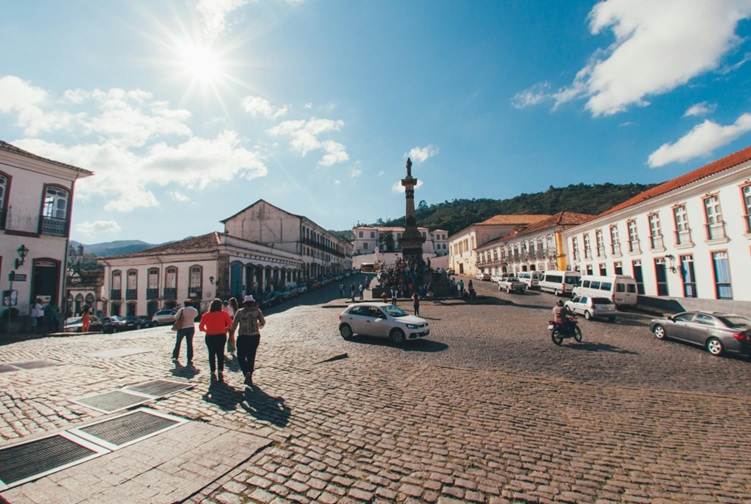
Managing partner JP Conte’s selection of Ouro Preto for Christmas 2025 reflected an appreciation for cultural heritage that extends beyond commercial tourism. The city in Minas Gerais represents an intersection of Brazilian history, baroque artistic achievement, and living religious tradition—elements that combine to create experiences unavailable in conventional holiday destinations.
Ouro Preto’s preservation as a near-intact colonial city results from conscious decisions by Brazilian heritage authorities and the community itself. The UNESCO World Heritage designation in 1980 formalized international recognition of the city’s exceptional value while establishing frameworks for conservation that balance preservation with contemporary needs.
The Basilica’s Historical Significance
The Basílica de Nossa Senhora do Pilar serves as both a National Historic and Artistic Heritage Institute (IPHAN) protected monument and an active parish church. This dual status requires coordination between heritage preservation specialists and religious authorities to ensure that conservation work respects the building’s ongoing liturgical function.
Construction of the current structure began around 1728, with initial focus on the nave to allow continued worship in the primitive chapel that occupied part of the site. The project proceeded through several phases, with different artisans contributing specialized work over decades. João de Carvalhais painted the nave ceiling’s fifteen Old Testament panels in 1768, while Bernardo Pires executed complementary painting work throughout the interior.
The 1733 inauguration featured the Triunfo Eucarístico, a procession transferring the Santíssimo Sacramento from its temporary location at the Igreja do Rosário to the new basilica. Contemporary accounts describe elaborate decorations, musical performances, and participation by civic and religious authorities in what became the most celebrated public ceremony of colonial Brazil’s mining era.
The Christmas Eve Gathering
JP Conte attended the solemn Christmas Mass alongside supermodel Naomi Campbell, who has maintained connections with Brazil for more than three decades. Fashion designer Erika Mares Guia, whose family owns property in the historic center, facilitated the gathering. Businessman Vasco Litchfield and Ouro Preto Mayor Angelo Oswaldo completed the group at the December 25 celebration.
Mayor Oswaldo issued statements through municipal channels emphasizing the symbolic importance of international visitors choosing Ouro Preto for meaningful occasions. The municipality’s social media posts described how such gatherings reinforce the city’s cultural and spiritual projection while demonstrating its universal appeal.
Economic Dimensions of Cultural Tourism
Ouro Preto’s economy transitioned from gold mining to tourism over the past century as mineral deposits became exhausted. The city now depends substantially on visitors attracted to its preserved colonial architecture, religious art, and historical significance. Tourism generates revenue that supports preservation work while providing employment in hotels, restaurants, and cultural institutions.
High-profile visits create media attention that extends beyond traditional tourism marketing budgets. The December 2025 Christmas Mass received coverage in Brazilian national media and international outlets, introducing Ouro Preto to audiences who might not otherwise consider visiting interior Minas Gerais. Photographs of philanthropist J-P Conte and Campbell at the baroque basilica provided compelling visual content that highlighted the city’s architectural treasures.
The UNESCO World Heritage designation attracts visitors interested in cultural heritage while establishing conservation standards that preserve the city’s historic character. Designation requires ongoing maintenance of protected structures, with periodic inspections ensuring compliance with international preservation standards. Tourism revenue provides essential funding for this continuous conservation work.
The Christmas period offers particular advantages for cultural heritage tourism. Religious celebrations showcase living traditions within historical settings, allowing visitors to witness authentic practices rather than staged performances. The Basílica do Pilar’s Christmas Mass continues an observance that dates to the church’s 18th-century inauguration, providing continuity across nearly three centuries. Figures like business leader JP Conte choosing such celebrations for their own holiday observances demonstrates sophisticated appreciation for cultural authenticity that transcends superficial tourism experiences.
Click here to read JP Conte’s inspiring family story.
 247 Headline News Blog